+Subscribe
Get Our Newsletter
A daily blend of the most need-to-know stories, delivered right to your inbox.
Sign Up
Get the latest featured news, entertainment, sports and more.

Download Our App


Subscribe to the newspaper

Subscribe
TWO NEW EXIBITS AT THE SKIRBALL OPENING TODAY MAY 20TH.The Comic Book Revolution and Outsiders, Outcasts, Rebels + Weirdos: Punk Culture 1976–86
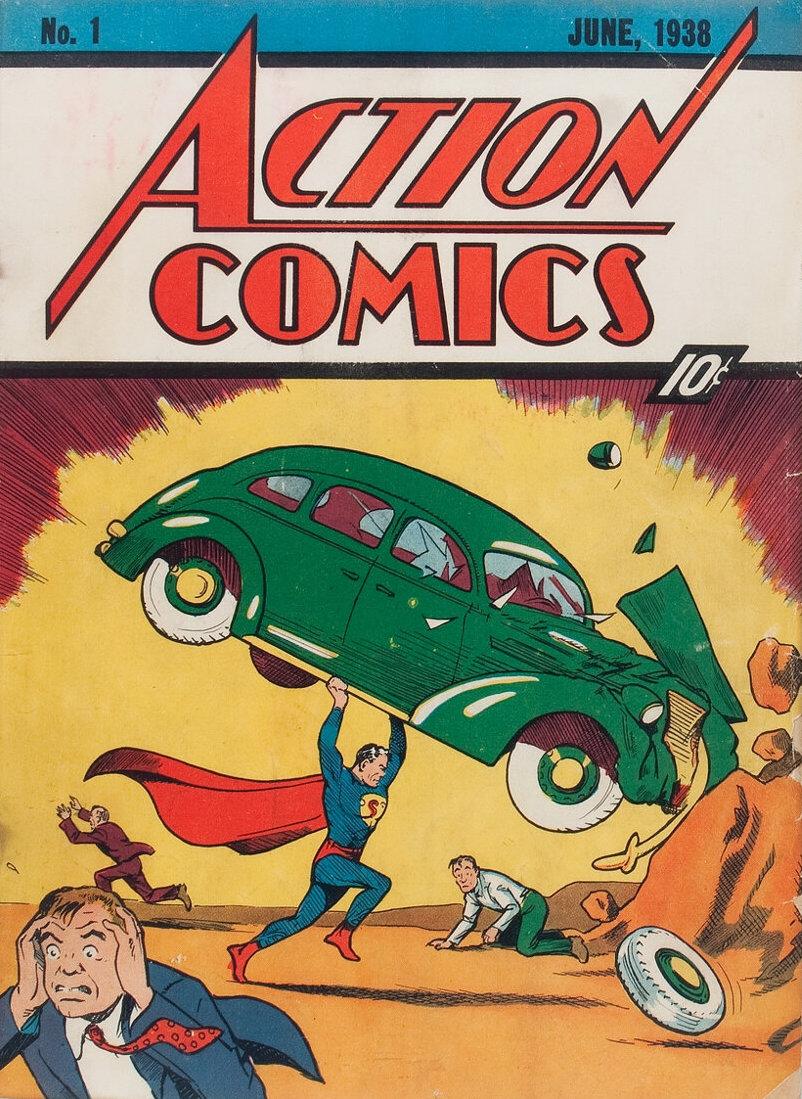
Cover Art: Joe Shuster Detective Comics Inc. / DC Comics, 1938
Wed, May 20, 2026
Skirball Cultural Center Presents the Worldwide Debut of Inventing America: The Comic Book Revolution opening May 20, 2026.
A comprehensive retrospective examining comics as a revolutionary cultural medium, shaping national identity
Riot Games Co-Founder and Presenting Donor Brandon Beck Gifts Captain America Comics #1 to the Skirball Cultural Center
Cover Art: Joe Shuster Detective Comics Inc. / DC Comics, 1938
LOS ANGELES, CA (May 20, 2026)—The Skirball Cultural Center announces the worldwide debut of the exhibition Inventing America: The Comic Book Revolution. Inventing America: The Comic Book Revolution explores how comic books created pop culture heroes that helped Americans imagine themselves as real-world heroes on a global stage.
Organized by the Skirball with significant loans from the collection of Riot Games Co-Founder and Presenting Donor Brandon Beck, the exhibition features over 250 objects, including comic books, original art, artifacts, and ephemera, spanning the twentieth century. Visitors are invited to become part of the story through several interactive experiences. Inventing America: The Comic Book Revolution opens to the public on Wednesday, May 20, 2026, and is on view at the Skirball Cultural Center through February 28, 2027.
“Every comic book in this exhibit is a piece of living history—a window into the aspirations and imagination of the Americans who made them and the people who enjoyed them,” said Beck. “I’m grateful to the Skirball for telling this important story so powerfully.”
American comic books evolved from modest beginnings into one of the most influential forms of popular entertainment. Immigrant and first-generation Americans created many of the best-known comics and the heroes that continue to command pop culture fandom today. Drawing on their experiences and powered by imagination and artistry, they helped construct a vision of America defined by personal struggle, aspiration, and reinvention. As the nation became more diverse over the course of the twentieth century, so did the narrative that comic books helped shape and reshape. The exhibition traces this evolution from the Great Depression through the dawn of the new millennium.
As the nation approaches its semiquincentennial, Inventing America: The Comic Book Revolution showcases the power of visual storytelling in constructing national identity, amplifying diverse voices, and imagining new possibilities for the future. By inviting visitors to engage directly with these narratives, the Skirball Cultural Center aligns with America250’s mission to foster reflection, participation, and a deeper understanding of the ideals, contradictions, and creativity that have defined the United States across 250 years.
Inventing America highlights how comics reflected—and at times anticipated—an increasingly complex and inclusive society. Visitors encounter iconic figures of American popular culture, including Superman, Captain America, Wonder Woman, Spider-Man, Little Lulu, Archie, Black Panther, and the Teenage Mutant Ninja Turtles. Each emerged from pivotal historical moments, capturing the anxieties, ideals, and imagination of their era.
Through original artwork and rare artifacts, the exhibition connects comic book storytelling to defining national experiences: World War II, the social upheavals of the 1960s, the cultural impact of pop art and hip-hop, and ongoing movements for justice and equality. Together, these materials reveal comics as both entertainment and historical record—vivid, inventive, and deeply reflective of the American experience.
Highlights of objects on display in Inventing America: The Comic Book Revolution include:
Action Comics #1
Young, first-generation Jewish writer and artist duo Jerry Siegel and Joe Shuster spent five years pitching the idea of a superhero as a newspaper strip, with no luck. Superman debuted in comic book form as the lead story in Action Comics #1 in 1938.
Captain America Comics #1
As young Jewish Americans, Jack Kirby and Joe Simon were acutely aware of the Nazi threat and growing antisemitism in the US. Kirby and Simon created Captain America, a patriotic superhero whose mission was to fight Nazis, a year before the US entered the war. Captain America Comics #1 was released in December 1940 and sold over a million copies. Beck donated this item to the Skirball Cultural Center.
In this issue, Wonder Woman sees herself running for President against Professor Manly, who campaigns on a male supremacy platform. As Manly and his group, the “Man's Party,” try to rig the election, Diana intervenes and is sworn in as President.
Is This Tomorrow
Social and political changes swept across America after World War II. The Cold War with Russia took root, the space race took flight, and a growing fear of atomic war seeped into popular culture. The country prospered, but under a shadow of anxiety and fear.
Harvey Kurtzman launched MAD in 1952. It quickly gained a reputation for its talented writers and artists, and its clever skewering of entertainment, society, and politics. By the early 1970s, it sold more than 2,000,000 copies per issue. This issue of MAD, dated 1961 but released in November 1960, was published as a flipbook with half the pages inverted and two front covers. It could be displayed with either side outward, creating the illusion that MAD’s editors had accurately predicted the presidential election winner—until readers flipped the magazine and discovered the gag.
In the late 1960s, Marvel Comics writer and editor Stan Lee (b. Stanley Martin Lieber, 1922–2018) built a reputation for expanding the superhero genre and adopting a more progressive point of view than other publishers. Lee and his stable of artists collaborated on many stories that confronted societal issues.
In 1970, Bay Area cartoonists Trina Robbins and Barbara “Willy” Mendes recruited other local artists to release It Ain’t Me Babe Comix #1, the first comic book made entirely by women.
In the 1970s, Captain America partnered with the Falcon, Marvel’s first African American superhero. Together, they battled government conspirators, secessionists, and white supremacists.
“Inventing America examines twentieth-century American history and culture through the lens of comic books,” continued co-curator and Skirball Museum Deputy Director Michele Urton. “It highlights the impact of the artists and writers who, shaped by their unique experiences, brought important stories to life—stories that, in turn, helped shape American culture itself."
“The comic book is a vital American art form, a commercial medium that despite—or even because of—its origin as "children's entertainment", can offer perspective on, and reveal truths about, our society and culture,” said co-curator of the exhibition Patrick A. Reed.
For more information, please visit: skirball.org.
Curatorial Acknowledgments.
This exhibition is organized by the Skirball Cultural Center and co-curated by guest curator Patrick A. Reed and Skirball Museum Deputy Director Michele Urton.
Inventing America: The Comic Book Revolution and its related educational programs at the Skirball Cultural Center are made possible by presenting donors Brandon Beck and The Karsh Family Foundation. Beck, Riot Games co-founder, drew inspiration from comic artists in his work creating video games and was instrumental in bringing key lenders and collectors essential to the exhibition to the Skirball. The exhibition was also made possible with additional support from Alicia Miana and Robert Lovelace and U.S. Bank.
About the Skirball
The Skirball Cultural Center is a place of meeting guided by the Jewish tradition of welcoming the stranger and inspired by the American democratic ideals of freedom and equality. We welcome people of all communities and generations to participate in cultural experiences that celebrate discovery and hope, foster human connections, and call upon us to help build a more just society.
Visiting the Skirball
The Skirball is located at 2701 N. Sepulveda Blvd., Los Angeles, CA 90049. Museum hours: Tuesday–Friday, 12:00–5:00 pm; Saturday–Sunday, 10:00 am–5:00 pm; closed Mondays and holidays. Reservations are recommended for General Admission and the permanent exhibition Noah's Ark at the Skirball, which requires timed entry and is ticketed separately. For general information, the public may call (310) 440-4500 or visit skirball.org.
Skirball Cultural Center Presents
Outsiders, Outcasts, Rebels + Weirdos:
Punk Culture 1976–86
May 20, 2026 - September 6, 2026
The Ramones at Hammersmith Odeon, London 1978 | Photographer: Sheila Rock
LOS ANGELES, CA (April 21, 2026)—The Skirball Cultural Center announces details of Outsiders, Outcasts, Rebels + Weirdos: Punk Culture 1976–86, opens to the public on Wednesday, May 20, 2026 at the Skirball Cultural Center and remains on view through September 6, 2026.
“Punk” has meant different things to different people. It has been a sound, a look, a politics, an ideology, and a lifeline—its definition shifting across geography and time. Yet the term endures.
2026 marks fifty years since punk burst beyond New York City, a scene with a notable number of musicians of Jewish heritage. As punk traveled to the UK and other parts of the US, Jews continued in smaller numbers to be part of the early punk scene. Some grew up in religious families, others in secular ones. Some didn’t feel connected to their Jewish heritage. Some hid or denied their Jewish origins. Some claimed their Jewish identity proudly. Most didn’t think of themselves as Jewish punks. They were just punks.
Outsiders, Outcasts, Rebels + Weirdos: Punk Culture 1976–86 at the Skirball Cultural Center highlight the stories of Jewish punks and fellow travelers including Malcolm McLaren, plus members of the Ramones, the Circle Jerks, the Dictators, Bad Religion, Blondie, Suicide, Jonathan Richman, the Patti Smith Group, and more. By centering these narratives within the broader story of punk, the exhibition underscores how artists from many communities helped shape a movement that continues to challenge norms around identity, power, and belonging.
Featuring more than 500 objects and pieces of ephemera, Outsiders, Outcasts, Rebels, and Weirdos brings this history into sharp focus—from handmade flyers, zines, buttons, and posters to early clothing by fashion designers Vivienne Westwood and Malcolm McLaren. These iconic garments, alongside video, audio, photographs and other artifacts, anchor visitors in the visual and material world of punk while opening space for lesser-known stories.
"At its core this exhibition is about creating and finding community – just faster and louder," said Cate Thurston, Chief Curator of the Skirball Cultural Center.
“Punk was a way to reject normality, banality, conformity, and outdated mainstream points of view. It was a way to find your own voice and your own tribe, a place to put all your anger and energy but also all your creativity and potential,” said co-curator Michael Worthington.
Outsiders, Outcasts, Rebels + Weirdos: Punk Culture 1976–86 explores the connections and contradictions between early punk scenes. The first half of the exhibition moves through four highlighted cities: New York, London, Los Angeles, and Washington, DC. The second half steps back from geography to survey punk's broader culture, including the relationship between punk and the visual arts.
Below is a selection from the co-curators highlighting some of their favorite objects in the exhibition:
New York City
Punk Magazine, Issue No. 03 – with Ramones, April 1976; Punk Magazine, Issue No. 07 – with Patti Smith, Blue Oyster Cult, and Eddie & the Hot Rods, February 1977. Courtesy of Andrew Krivine.
These two covers of Punk Magazine help capture the spirit and energy of early punk. Cartoonist John Holmstrom and writer Legs McNeil (b. James Ambrose McNeil) created Punk magazine, coining the term "punk" for the new music coming out of New York. The covers display Patti Smith Band on the left and the Ramones on the right, signed by every member of the Ramones. What we like about this pairing is that both groups had Jewish members with a range of connections to their Jewish heritage or identity. There is no one way to be Jewish, and this exhibition is a loving, messy, revelatory, complicated, and at times funny illustration of that.
One of the exciting things about exhibitions is that they can celebrate and share work that was unrecognized when it was created. Pure Hell formed in Philadelphia before moving to New York in 1975. They caught the attention of labels but decided to release their album independently because record companies wanted them to change their sound to fit racial stereotypes for Black musicians. The master tapes to their debut album were stolen by their manager, and their debut record "Noise Addiction" didn't come out until 2005.
West Coast
One of the interesting things about the process for this exhibition was discovering the sheer volume of key bands, including the Weirdos, who had Jewish members. The Weirdos were a super influential LA punk band who helped inspire a lot of groups that came after them. They never released a record, and their hugely popular shows were performance art as much as concerts. They were art students and musicians who made their own clothes and designed their own flyers. We are very excited that Roman's Weirdos will be playing at the Members Opening on May 19th.
The Dead Kennedys are an important band from San Francisco who continue to weaved together politics and punk, all while having a little fun. There are several Dead Kennedys flyers and posters in the exhibition, including a flyer for their song "Nazi Punks Fuck Off" (not pictured here). This heavily reproduced original flyer for a New Years Eve show with Butthole Surfers and T.S.O.L. is a powerful demonstration of the graphic political punch they embraced in their lyrics and visuals.
The Screamers became well known for their logo of a roaring spiked-hair punk, designed by artist Gary Panter. One of the most popular bands in the LA scene, they never released an album, single, or EP. What exists of their work from the period comes from bootleg recordings, Super 8 film footage, photographs, and ephemera, including show flyers, of which there are several in the exhibition.
United Kingdom
We chose this Rock Against Racism poster (RAR) because it tells an important story. Between 1976 and 1981, RAR and the Anti-Nazi League organized seven carnivals, a 100,000-strong march, and more than 500 gigs across the UK to combat bigotry, including antisemitism. Punk bands were central to these efforts. This poster is for the most famous of the RAR concerts, bands such as X-Ray Spex, the Clash, Steel Pulse, and the Tom Robinson Band performed. The poster was designed by David King, an important British designer and design historian. Part of what is so cool about this piece is that it highlights the power of collective action in fighting prejudice and underscores that art and music are vital to that work.
LA is proudly an industry town, and we want to highlight and share those stories. This film was directed by Don Letts, a documentarian and key figure in the early UK punk scene. The Punk Rock Movie features rare live footage of the Sex Pistols, the Clash, Siouxsie and the Banshees, the Slits, X-Ray Spex, and Jayne County, among others. Along with recording the scene, Letts was also the DJ at the Roxy Club, London's first punk club. There were no punk records to play between live acts, so he played reggae albums. Letts said it was "the element that gave British punk its distinct identity."
Vivienne Westwood (British, 1941–2022) and Malcolm McLaren (British, 1946–2010). "Anarchist Punk Gang – The 1% ers" T-shirt. Seditionaries, 1976–1980. Courtesy of Malcolm Garrett Collection held at Manchester Metropolitan University Special Collections Museum.
This is a cultural history exhibition, and we are interested in how punk felt and looked just as much as we are interested in the music and history of the genre. Clothes are central to that story, and we are honored to be able to highlight early pieces by Vivienne Westwood and Malcolm McLaren. McLaren was raised by his Sephardic Jewish grandmother Rose, who taught him "to be bad is good … to be good is simply boring," a motto that shaped him. Together, Westwood and McLaren invented the look of UK punk. Their shop on the King's Road went through several names. It became a place where the punk aesthetic was made and where punks gathered to find each other.
For more information, please visit: skirball.org.
###
About the Skirball
The Skirball Cultural Center is a place of meeting guided by the Jewish tradition of welcoming the stranger and inspired by the American democratic ideals of freedom and equality. We welcome people of all communities and generations to participate in cultural experiences that celebrate discovery and hope, foster human connections, and call upon us to help build a more just society.
Visiting the Skirball
The Skirball is located at 2701 N. Sepulveda Blvd., Los Angeles, CA 90049. Museum hours: Tuesday–Friday, 12:00–5:00 pm; Saturday–Sunday, 10:00 am–5:00 pm; closed Mondays and holidays. Reservations are recommended for General Admission and the permanent exhibition Noah's Ark at the Skirball, which requires timed entry and is ticketed separately. For general information, the public may call (310) 440-4500 or visit skirball.org.
- Staff
A comprehensive retrospective examining comics as a revolutionary cultural medium, shaping national identity
Riot Games Co-Founder and Presenting Donor Brandon Beck Gifts Captain America Comics #1 to the Skirball Cultural Center
Cover Art: Joe Shuster Detective Comics Inc. / DC Comics, 1938
LOS ANGELES, CA (May 20, 2026)—The Skirball Cultural Center announces the worldwide debut of the exhibition Inventing America: The Comic Book Revolution. Inventing America: The Comic Book Revolution explores how comic books created pop culture heroes that helped Americans imagine themselves as real-world heroes on a global stage.
Organized by the Skirball with significant loans from the collection of Riot Games Co-Founder and Presenting Donor Brandon Beck, the exhibition features over 250 objects, including comic books, original art, artifacts, and ephemera, spanning the twentieth century. Visitors are invited to become part of the story through several interactive experiences. Inventing America: The Comic Book Revolution opens to the public on Wednesday, May 20, 2026, and is on view at the Skirball Cultural Center through February 28, 2027.
“Every comic book in this exhibit is a piece of living history—a window into the aspirations and imagination of the Americans who made them and the people who enjoyed them,” said Beck. “I’m grateful to the Skirball for telling this important story so powerfully.”
American comic books evolved from modest beginnings into one of the most influential forms of popular entertainment. Immigrant and first-generation Americans created many of the best-known comics and the heroes that continue to command pop culture fandom today. Drawing on their experiences and powered by imagination and artistry, they helped construct a vision of America defined by personal struggle, aspiration, and reinvention. As the nation became more diverse over the course of the twentieth century, so did the narrative that comic books helped shape and reshape. The exhibition traces this evolution from the Great Depression through the dawn of the new millennium.
As the nation approaches its semiquincentennial, Inventing America: The Comic Book Revolution showcases the power of visual storytelling in constructing national identity, amplifying diverse voices, and imagining new possibilities for the future. By inviting visitors to engage directly with these narratives, the Skirball Cultural Center aligns with America250’s mission to foster reflection, participation, and a deeper understanding of the ideals, contradictions, and creativity that have defined the United States across 250 years.
Inventing America highlights how comics reflected—and at times anticipated—an increasingly complex and inclusive society. Visitors encounter iconic figures of American popular culture, including Superman, Captain America, Wonder Woman, Spider-Man, Little Lulu, Archie, Black Panther, and the Teenage Mutant Ninja Turtles. Each emerged from pivotal historical moments, capturing the anxieties, ideals, and imagination of their era.
Through original artwork and rare artifacts, the exhibition connects comic book storytelling to defining national experiences: World War II, the social upheavals of the 1960s, the cultural impact of pop art and hip-hop, and ongoing movements for justice and equality. Together, these materials reveal comics as both entertainment and historical record—vivid, inventive, and deeply reflective of the American experience.
Highlights of objects on display in Inventing America: The Comic Book Revolution include:
Action Comics #1
Young, first-generation Jewish writer and artist duo Jerry Siegel and Joe Shuster spent five years pitching the idea of a superhero as a newspaper strip, with no luck. Superman debuted in comic book form as the lead story in Action Comics #1 in 1938.
Captain America Comics #1
As young Jewish Americans, Jack Kirby and Joe Simon were acutely aware of the Nazi threat and growing antisemitism in the US. Kirby and Simon created Captain America, a patriotic superhero whose mission was to fight Nazis, a year before the US entered the war. Captain America Comics #1 was released in December 1940 and sold over a million copies. Beck donated this item to the Skirball Cultural Center.
In this issue, Wonder Woman sees herself running for President against Professor Manly, who campaigns on a male supremacy platform. As Manly and his group, the “Man's Party,” try to rig the election, Diana intervenes and is sworn in as President.
Is This Tomorrow
Social and political changes swept across America after World War II. The Cold War with Russia took root, the space race took flight, and a growing fear of atomic war seeped into popular culture. The country prospered, but under a shadow of anxiety and fear.
Harvey Kurtzman launched MAD in 1952. It quickly gained a reputation for its talented writers and artists, and its clever skewering of entertainment, society, and politics. By the early 1970s, it sold more than 2,000,000 copies per issue. This issue of MAD, dated 1961 but released in November 1960, was published as a flipbook with half the pages inverted and two front covers. It could be displayed with either side outward, creating the illusion that MAD’s editors had accurately predicted the presidential election winner—until readers flipped the magazine and discovered the gag.
In the late 1960s, Marvel Comics writer and editor Stan Lee (b. Stanley Martin Lieber, 1922–2018) built a reputation for expanding the superhero genre and adopting a more progressive point of view than other publishers. Lee and his stable of artists collaborated on many stories that confronted societal issues.
In 1970, Bay Area cartoonists Trina Robbins and Barbara “Willy” Mendes recruited other local artists to release It Ain’t Me Babe Comix #1, the first comic book made entirely by women.
In the 1970s, Captain America partnered with the Falcon, Marvel’s first African American superhero. Together, they battled government conspirators, secessionists, and white supremacists.
“Inventing America examines twentieth-century American history and culture through the lens of comic books,” continued co-curator and Skirball Museum Deputy Director Michele Urton. “It highlights the impact of the artists and writers who, shaped by their unique experiences, brought important stories to life—stories that, in turn, helped shape American culture itself."
“The comic book is a vital American art form, a commercial medium that despite—or even because of—its origin as "children's entertainment", can offer perspective on, and reveal truths about, our society and culture,” said co-curator of the exhibition Patrick A. Reed.
For more information, please visit: skirball.org.
Curatorial Acknowledgments.
This exhibition is organized by the Skirball Cultural Center and co-curated by guest curator Patrick A. Reed and Skirball Museum Deputy Director Michele Urton.
Inventing America: The Comic Book Revolution and its related educational programs at the Skirball Cultural Center are made possible by presenting donors Brandon Beck and The Karsh Family Foundation. Beck, Riot Games co-founder, drew inspiration from comic artists in his work creating video games and was instrumental in bringing key lenders and collectors essential to the exhibition to the Skirball. The exhibition was also made possible with additional support from Alicia Miana and Robert Lovelace and U.S. Bank.
About the Skirball
The Skirball Cultural Center is a place of meeting guided by the Jewish tradition of welcoming the stranger and inspired by the American democratic ideals of freedom and equality. We welcome people of all communities and generations to participate in cultural experiences that celebrate discovery and hope, foster human connections, and call upon us to help build a more just society.
Visiting the Skirball
The Skirball is located at 2701 N. Sepulveda Blvd., Los Angeles, CA 90049. Museum hours: Tuesday–Friday, 12:00–5:00 pm; Saturday–Sunday, 10:00 am–5:00 pm; closed Mondays and holidays. Reservations are recommended for General Admission and the permanent exhibition Noah's Ark at the Skirball, which requires timed entry and is ticketed separately. For general information, the public may call (310) 440-4500 or visit skirball.org.
Skirball Cultural Center Presents
Outsiders, Outcasts, Rebels + Weirdos:
Punk Culture 1976–86
May 20, 2026 - September 6, 2026
The Ramones at Hammersmith Odeon, London 1978 | Photographer: Sheila Rock
LOS ANGELES, CA (April 21, 2026)—The Skirball Cultural Center announces details of Outsiders, Outcasts, Rebels + Weirdos: Punk Culture 1976–86, opens to the public on Wednesday, May 20, 2026 at the Skirball Cultural Center and remains on view through September 6, 2026.
“Punk” has meant different things to different people. It has been a sound, a look, a politics, an ideology, and a lifeline—its definition shifting across geography and time. Yet the term endures.
2026 marks fifty years since punk burst beyond New York City, a scene with a notable number of musicians of Jewish heritage. As punk traveled to the UK and other parts of the US, Jews continued in smaller numbers to be part of the early punk scene. Some grew up in religious families, others in secular ones. Some didn’t feel connected to their Jewish heritage. Some hid or denied their Jewish origins. Some claimed their Jewish identity proudly. Most didn’t think of themselves as Jewish punks. They were just punks.
Outsiders, Outcasts, Rebels + Weirdos: Punk Culture 1976–86 at the Skirball Cultural Center highlight the stories of Jewish punks and fellow travelers including Malcolm McLaren, plus members of the Ramones, the Circle Jerks, the Dictators, Bad Religion, Blondie, Suicide, Jonathan Richman, the Patti Smith Group, and more. By centering these narratives within the broader story of punk, the exhibition underscores how artists from many communities helped shape a movement that continues to challenge norms around identity, power, and belonging.
Featuring more than 500 objects and pieces of ephemera, Outsiders, Outcasts, Rebels, and Weirdos brings this history into sharp focus—from handmade flyers, zines, buttons, and posters to early clothing by fashion designers Vivienne Westwood and Malcolm McLaren. These iconic garments, alongside video, audio, photographs and other artifacts, anchor visitors in the visual and material world of punk while opening space for lesser-known stories.
"At its core this exhibition is about creating and finding community – just faster and louder," said Cate Thurston, Chief Curator of the Skirball Cultural Center.
“Punk was a way to reject normality, banality, conformity, and outdated mainstream points of view. It was a way to find your own voice and your own tribe, a place to put all your anger and energy but also all your creativity and potential,” said co-curator Michael Worthington.
Outsiders, Outcasts, Rebels + Weirdos: Punk Culture 1976–86 explores the connections and contradictions between early punk scenes. The first half of the exhibition moves through four highlighted cities: New York, London, Los Angeles, and Washington, DC. The second half steps back from geography to survey punk's broader culture, including the relationship between punk and the visual arts.
Below is a selection from the co-curators highlighting some of their favorite objects in the exhibition:
New York City
Punk Magazine, Issue No. 03 – with Ramones, April 1976; Punk Magazine, Issue No. 07 – with Patti Smith, Blue Oyster Cult, and Eddie & the Hot Rods, February 1977. Courtesy of Andrew Krivine.
These two covers of Punk Magazine help capture the spirit and energy of early punk. Cartoonist John Holmstrom and writer Legs McNeil (b. James Ambrose McNeil) created Punk magazine, coining the term "punk" for the new music coming out of New York. The covers display Patti Smith Band on the left and the Ramones on the right, signed by every member of the Ramones. What we like about this pairing is that both groups had Jewish members with a range of connections to their Jewish heritage or identity. There is no one way to be Jewish, and this exhibition is a loving, messy, revelatory, complicated, and at times funny illustration of that.
One of the exciting things about exhibitions is that they can celebrate and share work that was unrecognized when it was created. Pure Hell formed in Philadelphia before moving to New York in 1975. They caught the attention of labels but decided to release their album independently because record companies wanted them to change their sound to fit racial stereotypes for Black musicians. The master tapes to their debut album were stolen by their manager, and their debut record "Noise Addiction" didn't come out until 2005.
West Coast
One of the interesting things about the process for this exhibition was discovering the sheer volume of key bands, including the Weirdos, who had Jewish members. The Weirdos were a super influential LA punk band who helped inspire a lot of groups that came after them. They never released a record, and their hugely popular shows were performance art as much as concerts. They were art students and musicians who made their own clothes and designed their own flyers. We are very excited that Roman's Weirdos will be playing at the Members Opening on May 19th.
The Dead Kennedys are an important band from San Francisco who continue to weaved together politics and punk, all while having a little fun. There are several Dead Kennedys flyers and posters in the exhibition, including a flyer for their song "Nazi Punks Fuck Off" (not pictured here). This heavily reproduced original flyer for a New Years Eve show with Butthole Surfers and T.S.O.L. is a powerful demonstration of the graphic political punch they embraced in their lyrics and visuals.
The Screamers became well known for their logo of a roaring spiked-hair punk, designed by artist Gary Panter. One of the most popular bands in the LA scene, they never released an album, single, or EP. What exists of their work from the period comes from bootleg recordings, Super 8 film footage, photographs, and ephemera, including show flyers, of which there are several in the exhibition.
United Kingdom
We chose this Rock Against Racism poster (RAR) because it tells an important story. Between 1976 and 1981, RAR and the Anti-Nazi League organized seven carnivals, a 100,000-strong march, and more than 500 gigs across the UK to combat bigotry, including antisemitism. Punk bands were central to these efforts. This poster is for the most famous of the RAR concerts, bands such as X-Ray Spex, the Clash, Steel Pulse, and the Tom Robinson Band performed. The poster was designed by David King, an important British designer and design historian. Part of what is so cool about this piece is that it highlights the power of collective action in fighting prejudice and underscores that art and music are vital to that work.
LA is proudly an industry town, and we want to highlight and share those stories. This film was directed by Don Letts, a documentarian and key figure in the early UK punk scene. The Punk Rock Movie features rare live footage of the Sex Pistols, the Clash, Siouxsie and the Banshees, the Slits, X-Ray Spex, and Jayne County, among others. Along with recording the scene, Letts was also the DJ at the Roxy Club, London's first punk club. There were no punk records to play between live acts, so he played reggae albums. Letts said it was "the element that gave British punk its distinct identity."
Vivienne Westwood (British, 1941–2022) and Malcolm McLaren (British, 1946–2010). "Anarchist Punk Gang – The 1% ers" T-shirt. Seditionaries, 1976–1980. Courtesy of Malcolm Garrett Collection held at Manchester Metropolitan University Special Collections Museum.
This is a cultural history exhibition, and we are interested in how punk felt and looked just as much as we are interested in the music and history of the genre. Clothes are central to that story, and we are honored to be able to highlight early pieces by Vivienne Westwood and Malcolm McLaren. McLaren was raised by his Sephardic Jewish grandmother Rose, who taught him "to be bad is good … to be good is simply boring," a motto that shaped him. Together, Westwood and McLaren invented the look of UK punk. Their shop on the King's Road went through several names. It became a place where the punk aesthetic was made and where punks gathered to find each other.
For more information, please visit: skirball.org.
###
About the Skirball
The Skirball Cultural Center is a place of meeting guided by the Jewish tradition of welcoming the stranger and inspired by the American democratic ideals of freedom and equality. We welcome people of all communities and generations to participate in cultural experiences that celebrate discovery and hope, foster human connections, and call upon us to help build a more just society.
Visiting the Skirball
The Skirball is located at 2701 N. Sepulveda Blvd., Los Angeles, CA 90049. Museum hours: Tuesday–Friday, 12:00–5:00 pm; Saturday–Sunday, 10:00 am–5:00 pm; closed Mondays and holidays. Reservations are recommended for General Admission and the permanent exhibition Noah's Ark at the Skirball, which requires timed entry and is ticketed separately. For general information, the public may call (310) 440-4500 or visit skirball.org.